
Co-designing a meaningful celebration with a child
My celebrant work is based on my ethos, that
Life’s significant moments deserve to be marked in a way that feels meaningful and deeply connecting.
What counts as a significant moment in life? Well for our child Sam, turning 6 was absolutely a significant moment in life! At his age, every single increment in age is important, although perhaps 6 is the best of all- as A A Milne says, ‘now I am six I am clever as clever, so I think I’ll be six for ever and ever!’.
6 is also an age (with Sam at least) when a child absolutely has their own ideas about what a celebration should include. Working with Sam to co-design a celebration that fitted the occasion was a beautiful process which reflects something of how I might work with other clients. We shared the joy that comes as creative ideas bubble and spark, the fun of doing the preparations together, and the excitement of setting things up ready for guests to arrive. Here’s an insight into my co-designing process. Obviously, we skipped the important ‘getting to know one another’ process which is fundamental to my work with clients, and given his age, the guiding questions were implicit to our co-designing process but I’ve shared them here in case they are helpful to you when thinking about a celebration. Please get in touch if you would like support to design one, or if you are looking for a celebrant to lead one- whether it’s a naming ceremony, a wedding, a parting or something else bespoke.
The process: 5 guiding questions
1. Why is this moment particularly significant? How can that be marked appropriately?
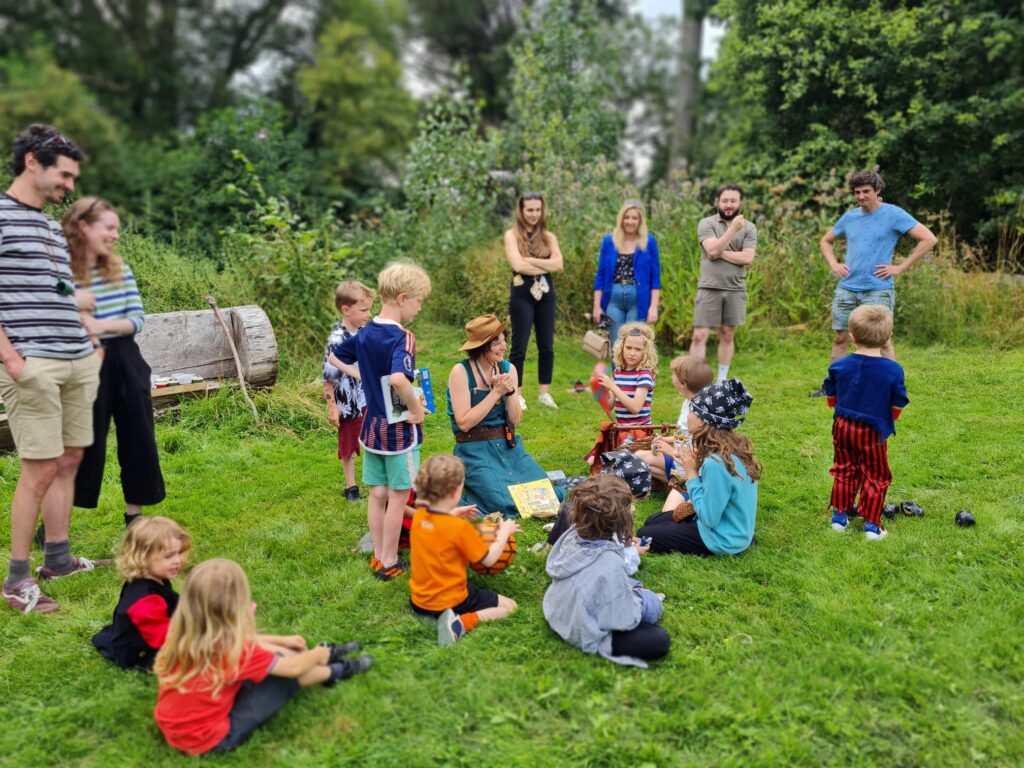
For Sam, this was his first birthday to be celebrated with a relatively new set of friends. In our previous home in Leeds we had created a village for Sam to grow up in. As mothers and fathers we had known each others’ children since birth, swapped childcare, organised alternatives to school together, been on holiday together. Although we are living in an actual village now, our relationships with other families are just embryonic and we haven’t yet developed the levels of familiarity and trust to imagine such things. It was therefore important for Sam and for us as his parents, to invite his friends and their parents and siblings, into our home environment and to share of ourselves with them. It was important that we did so in a way that felt welcoming and accessible to everyone, that we did it with honest and unashamed integrity.
2. Who is the celebration really for? Which needs might they have?
Birthdays are a moment to honour a person, but some people hate being the centre of attention, or overwhelmed by seeing all their friends at once, while others thrive on it! Tuning into the needs of the person we are celebrating is important, as we ultimately want them to enjoy and remember the moment rather than it being too much for them. Gifts are the go-to way to honour people but it can be much more significant to mark another year around the sun through ritual, an experience or other way that is stored in memory and heart. Sharing this moment with others holds us in community and weaves other people into our memories. I celebrated my 40th with a leap of faith on a high ropes and zipwires trail with a group of 10 women. Sam’s 5th birthday coincided with finishing preschool and preparing to leave his city of birth so we held a sunflower procession with his closest friends and their siblings. Focussing on the things that bind the birthday person together with others prompts us to think about the people we are drawing together and their needs as well- the other children, the parents, ourselves as the host parents. Can we avoid feeling so stressed that we don’t enjoy it? Can we ease the other parents into each others’ company so they feel more comfortable around each other despite perhaps never having met before? Can we minimise the competition amongst the children so that they can relax into experiencing the party? Can we tune into the needs of different aged children, more reserved and more confident children?
3. What needs to be let go of to enter freely into this celebration?
Celebrations can often be surrounded by heavy expectations about what they’re meant to be like, and children’s birthday parties are no exception. As the year turns around and each child has a party and invites their peers, both the child and the parents might start to think ‘what can we do [that lives up to / matches / surpasses/ breaks away from… the norm]?’ Between my childhood 80s (where most people had a party round their house or in a village hall, played party games and had a birthday tea) and now, there has been a gradual shift towards outsourcing the birthday entertainment and hosting to a children’s entertainer or venue such as a leisure centre, soft play etc, and a massive increase in the average money spent.
Neither our child nor my partner and I were trying to create a similar party to the ones Sam had been invited to. We already stand out as the weird ones who come to school by bike all year round! (Having said that, there is a brilliant community-run and family-friendly village hall and pub in his school village which is fantastic for hosting parties!). Sam was clear that he wanted to host the party at home (where we share fields, woodland and a pond with other community members). Personal expectations to let go of for me as parent and host, were around ‘perfection’ and ‘things going to plan’. This meant designing in enough structure to avoid total chaos, but enough flexibility to allow things to flow.
4. What kind of an experience are we aiming for people to have?
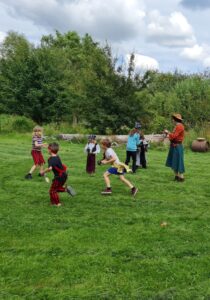
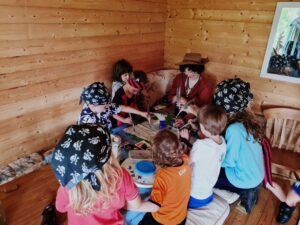
Since our guests were predominantly 5 year olds and their older and younger siblings, plus their parents, we wanted the party to be a journey in the imagination (with an unfolding story and things to discover along the way), inclusive (of the various ages and dispositions of the children), welcoming (of the parents including those we had never met before), connecting (avoiding any sense of competition between children, and enabling parents to connect with one another), fun and inspiring (showing an alternative way of celebrating that everybody enjoyed).
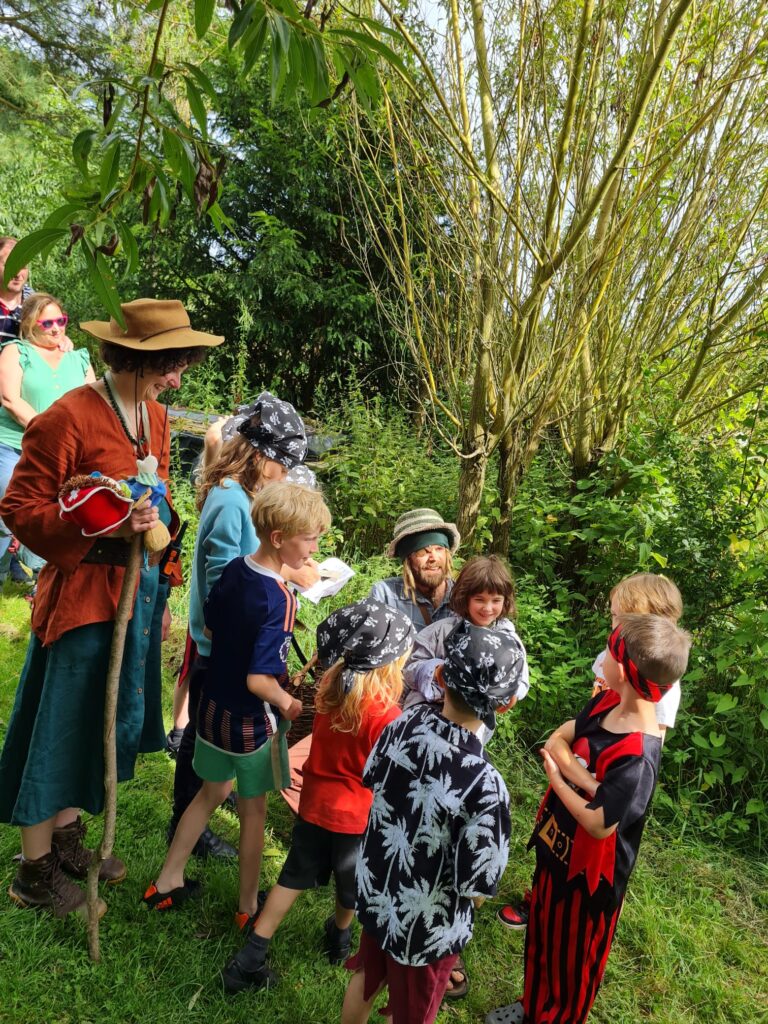
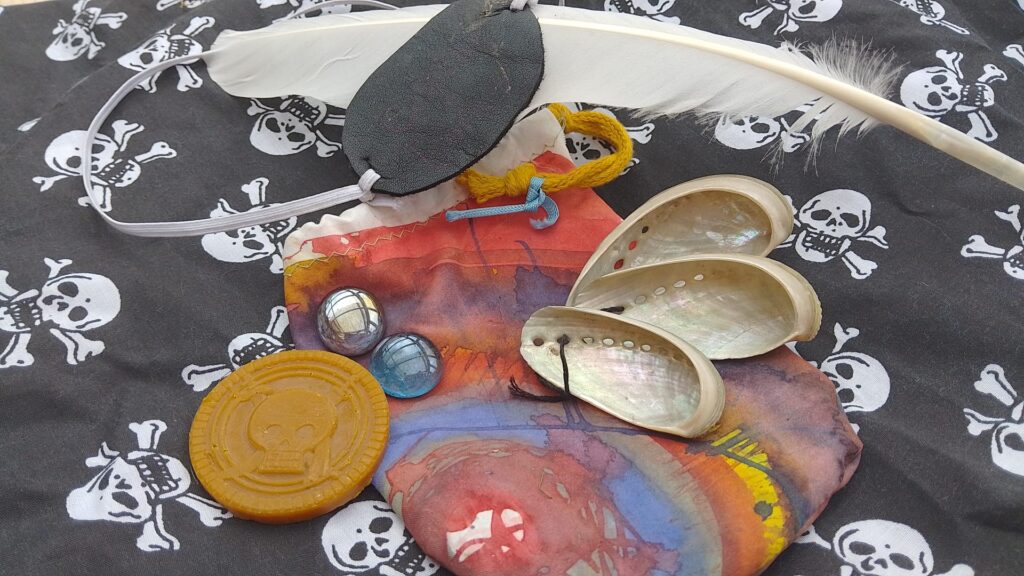
Sam was inspired by his dad and grandad’s storytelling about what their own parties were like when he was visioning how he’d like to celebrate his own. From these experiences he chose the theme of a pirate party and wanted his guests to spend some of their ‘treasure’ in a pretend shop where he would give away some of his preloved toys. He began gathering toys and we started collecting together other things to be given away as treasure- glass beads we’d dug up from the garden, special pearly shells, goosefeathers, beeswax to melt into gold coins, etc.
5. What is MOST important? Shaking off the non-essentials
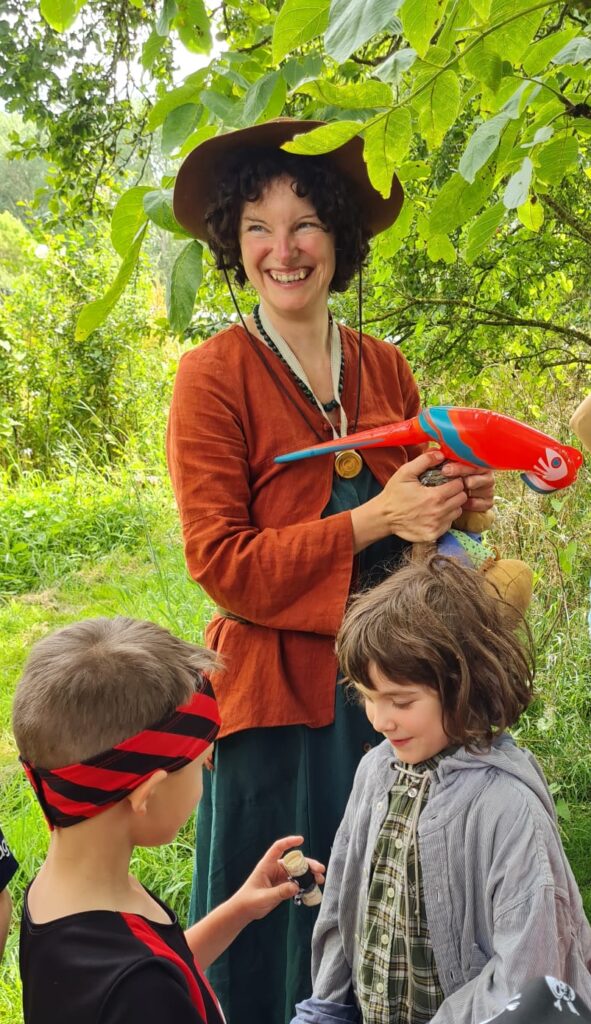
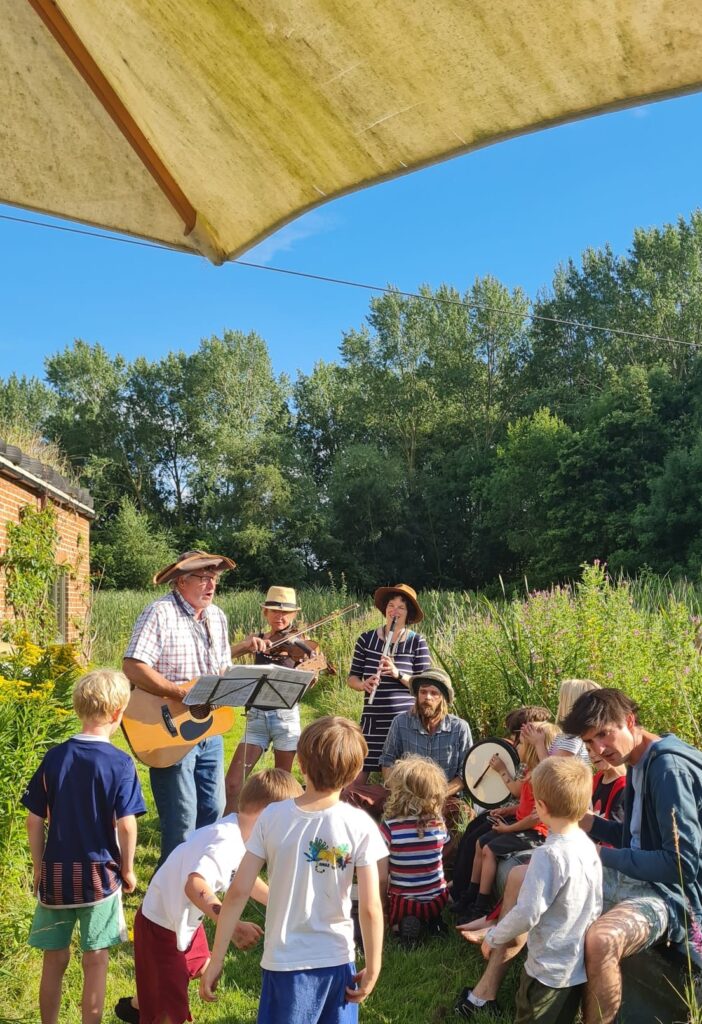
As the ideas grew in our minds and the party got closer, we got to the point of needing to simplify and let go of the non-essentials. A non negotiable for me (because it’s such an engrained ritual in our birthday traditions) was to make a special cake which Sam and I co-designed (and I stayed awake thinking about), but I handed over the decoration job to my partner because I noticed I’d become overly focussed on its details! In terms of the children’s experience and our goal of inclusivity, it was important to me that no one got left behind, every child had some souvenirs to take home and got an equal share of the ‘treasure’, so I wove in some values around taking care of each other and sharing fairly and inserted them into the ‘pirate code’. I also sewed each child a special bag to collect their treasure in. There were other things we let go of, either because the materials were not something we had already or because it was one thing too many. The pretend shop was a non negotiable for Sam, but he let go of the idea of constructing a ship out of haybales (which we’d have to buy), when he realised we could make the community shed into a ship. He had an idea to make a light-up squid to hang in the trees and scare people. I acknowledged his idea and thought about how we could make something simple out of bubble wrap, shiny paper and bike lights, but when given the choice between working on it together and playing, he was willing to let the idea go! Meanwhile, my partner spontaneously asked some fellow musicians a few days before if they’d like to come and play some Irish folk and they agreed. This turned out to be one of the favourite moments for some of the children, especially when they joined in the percussion and danced.
The values that underpinned our design were based on using available, preloved, reusable or biodegradable resources wherever possible, and including everybody.
The result
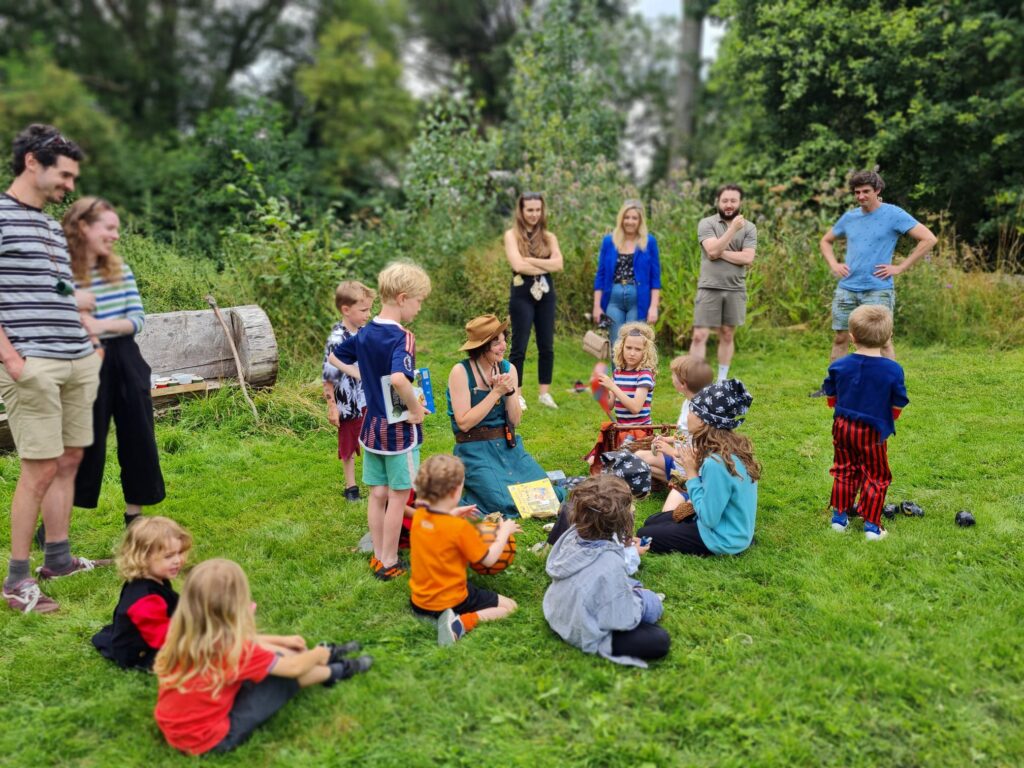
It was one of those celebrations that guests were reluctant to leave! Parents went away inspired by our creativity and said that we had taken their children on a journey. The ‘cannonball attack’ (bubblewrap balls with binbags around them to black them) on parents led by the children broke some ice just before we required more parental involvement to supervise their children when we were on the water. There was learning in there for me, for example next time I might pre-empt more excitement and bounciness at the beginning and have a more definite way of gathering people in (with a drum for example). I had also underestimated how much the children would love the live music and am super grateful to our musician friends Ruth and Jim for popping in join us!
Final words
Celebrations that centre children are important to do in a way that tunes into their needs, but also those of parents and others that need to be there with them. Where it’s possible to involve children in the design itself, we can co-create something that they find themselves within and are super proud of. Depending on the child and their age, I can co-design Naming Ceremonies or other bespoke children’s ceremonies with the child as well as their parent(s) or guardian(s). Please get in touch if you are interested!