
Reflections on Life and Death- the Five Remembrances
Buddha’s Five Remembrances were written in the and translated by Thich Nhat Hanh. I came across them at at friend’s house when he and his wife had just received her cancer diagnosis. Amazingly, she journeyed beyond the cancer and is well again. Below I share a few reflections on what they mean to me.
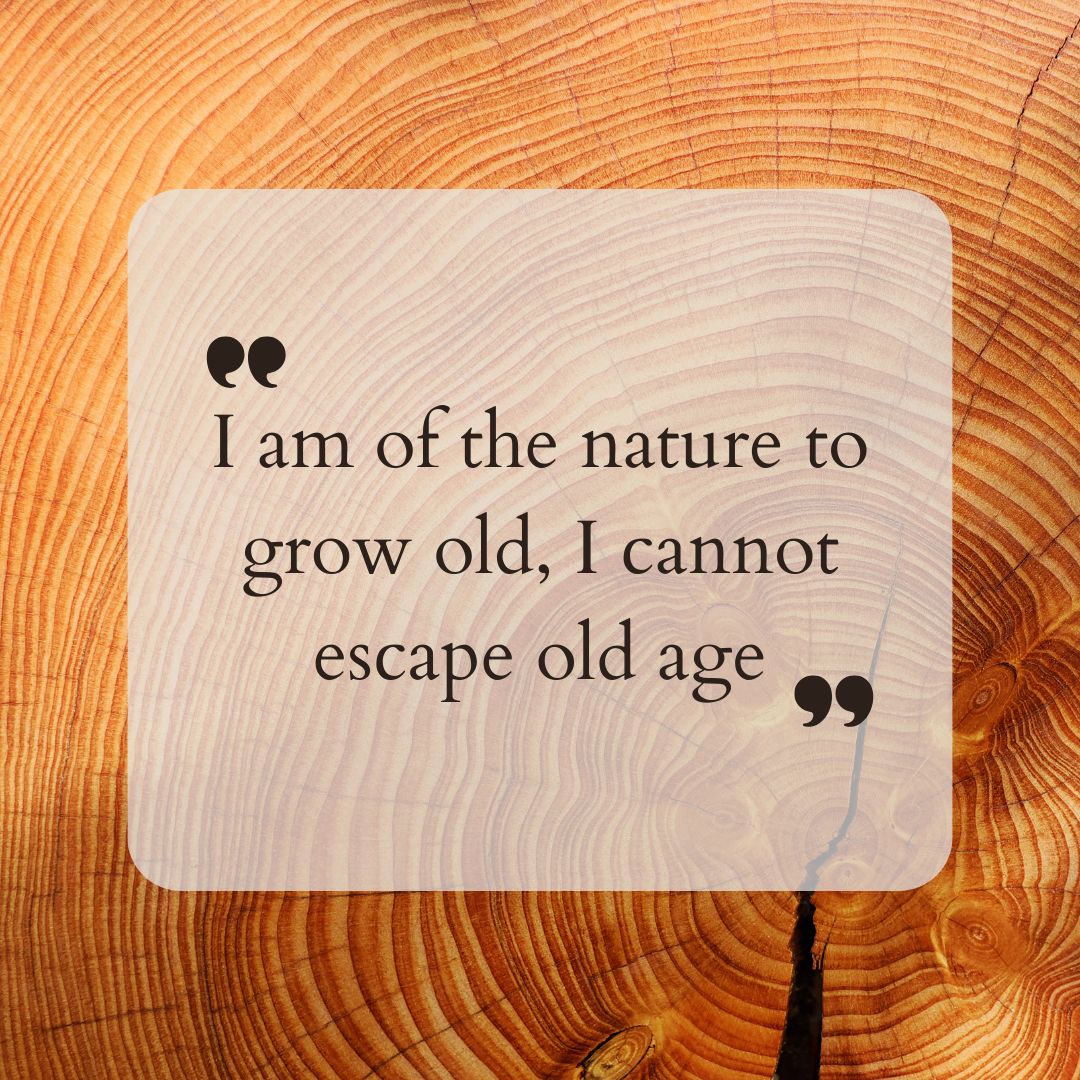
1. I am of the nature to grow old. I cannot escape old age.
We don’t all get to live until old age but I’m grateful for those that have grown old around me, for having known my grandparents, and for the rings of wisdom that those who have been on this earth for a long time gently radiate.
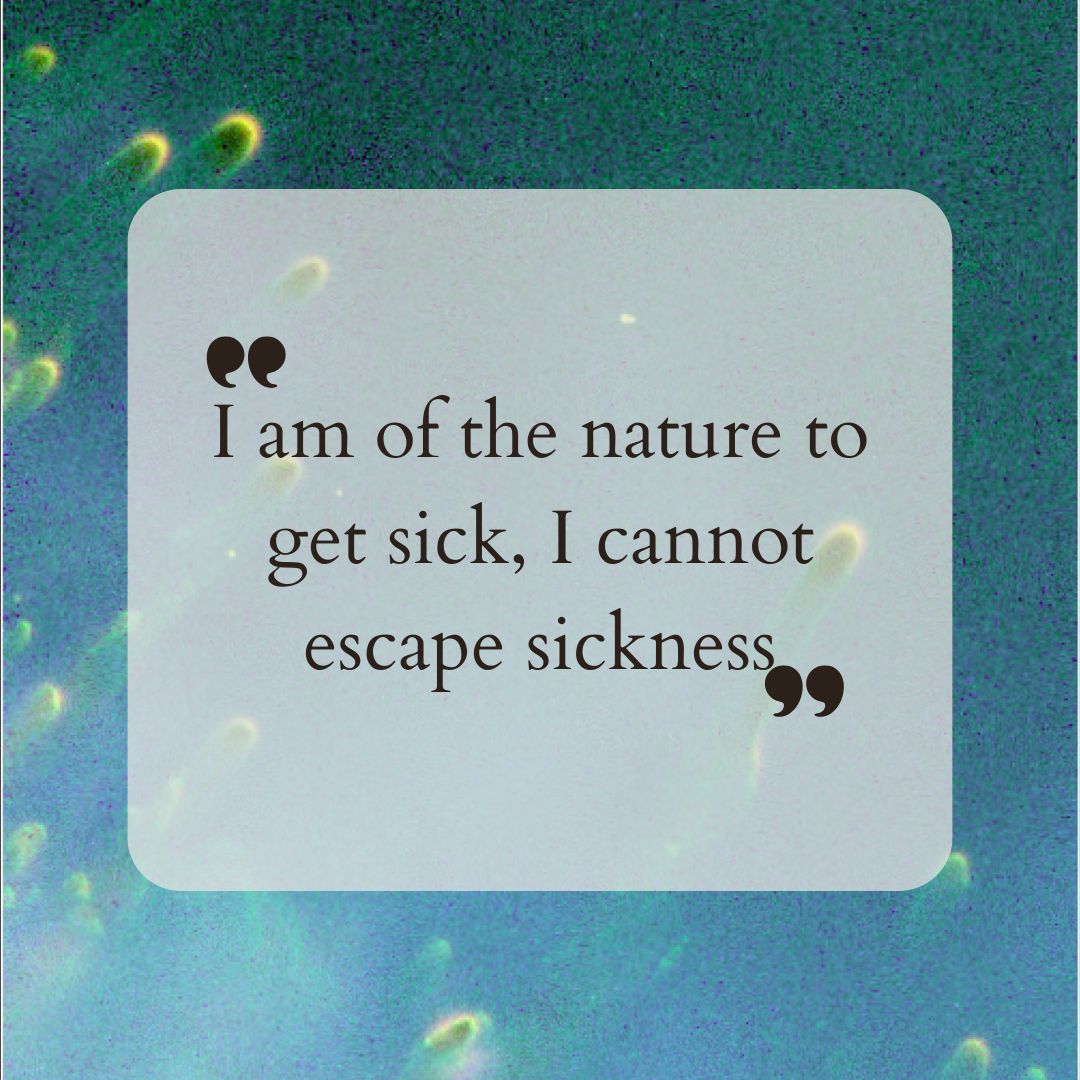
2. I am of the nature to get sick. I cannot escape sickness
Sometimes it’s easy to not appreciate good health unless I’ve just recovered from being sick. Perhaps if you’ve recovered from a major accident, illness or operation, gratitude for your life and health is more present with you. To me, this is a reminder that in every moment of good health there is a potential for sickness, and in every sickness there was once, and perhaps will again, be good health. Also there are so many forms of sickness and good health, so many ways in which we can seek to nourish ourselves in body, mind and spirit.
What nourishes you?
And how would you live your days if you knew that sickness was bringing your days to an end?
Would you want to celebrate your life with those around you whilst you were still alive?
How would you want people to honour the life you had lived?
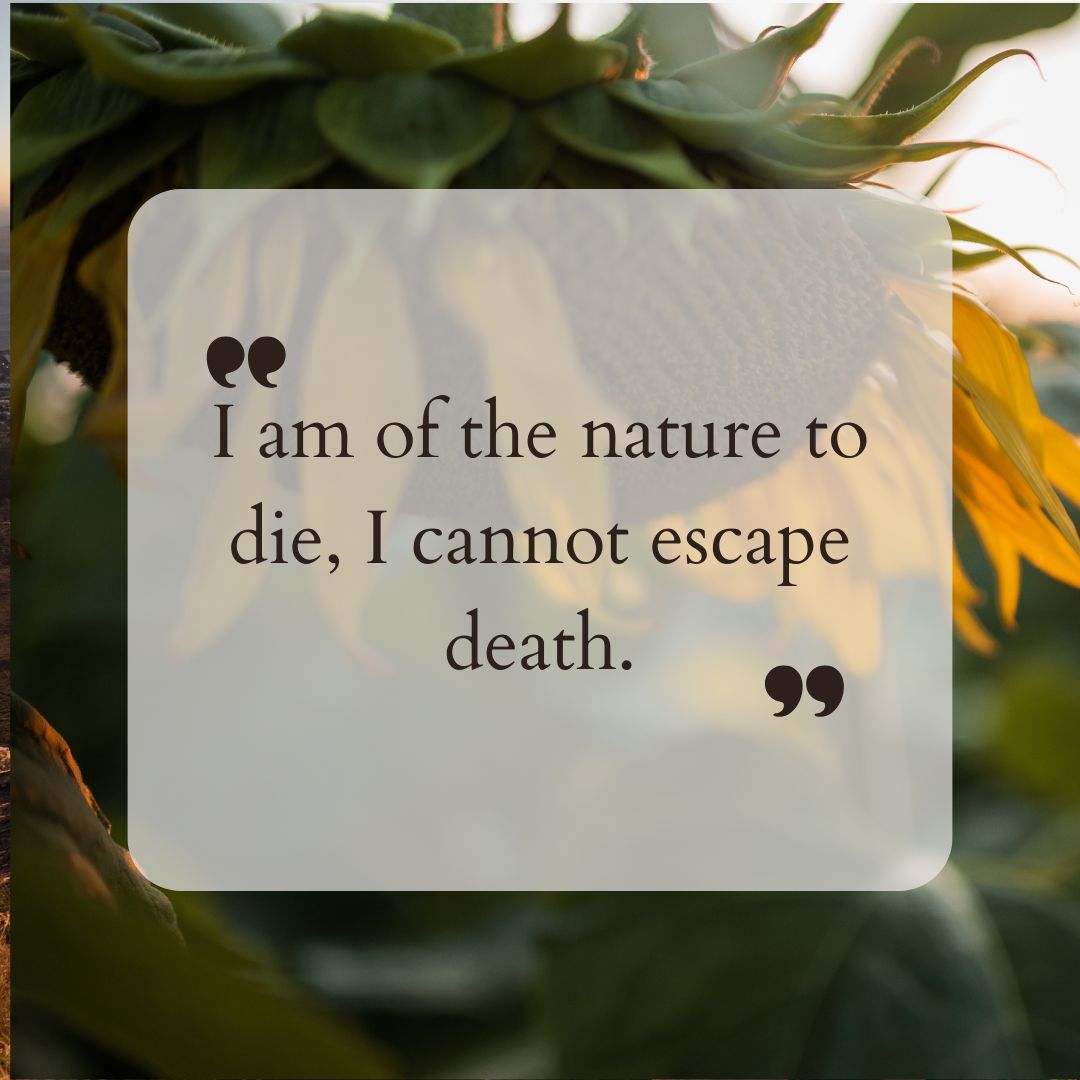
3. I am of the nature to die. I cannot escape death.
When someone dies or is approaching death, I believe in celebrating the life they lived, in all its variety, its beauty and its stamina. The sunflower reminds us about seeing the light in everyone, as well as the seeds they will leave behind.
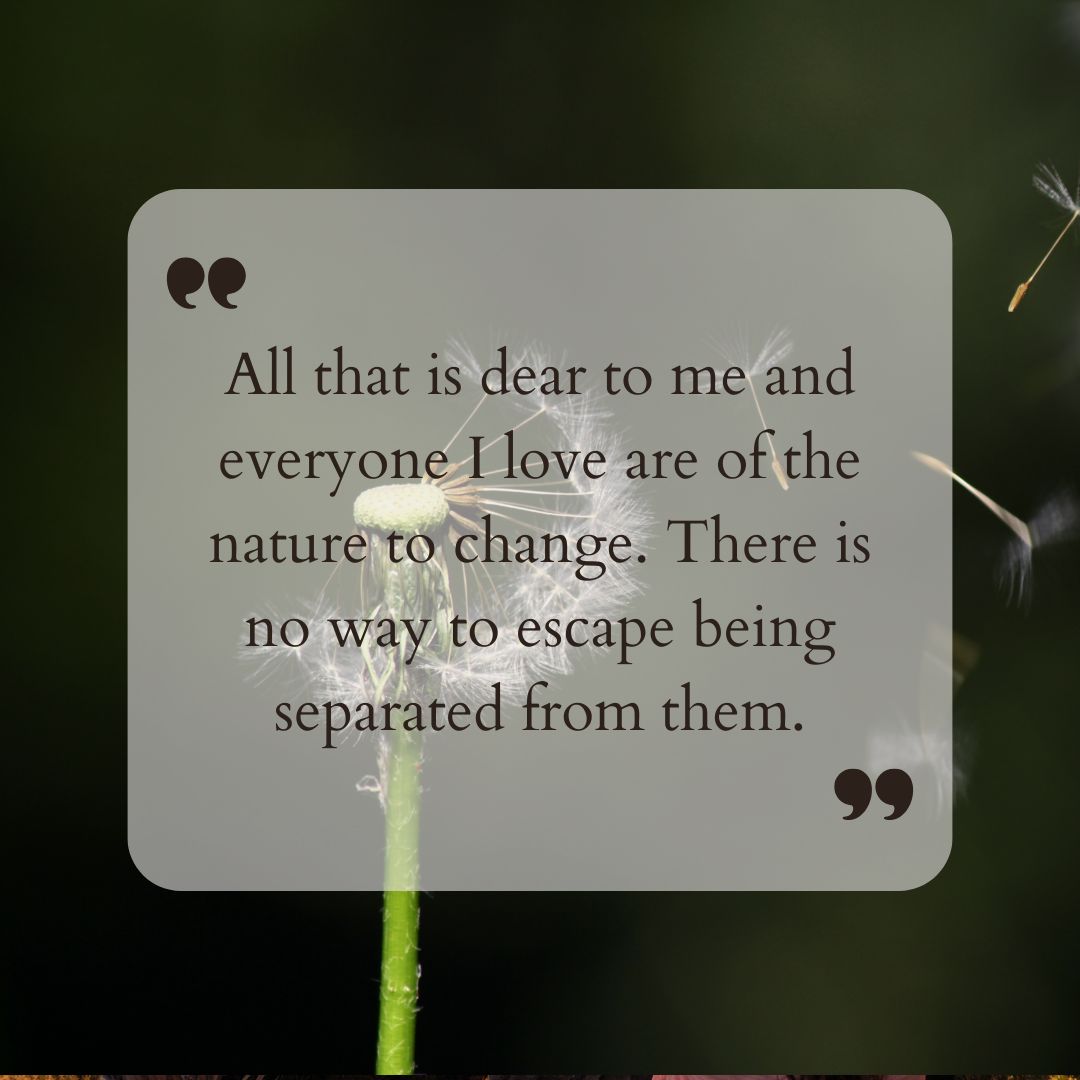
4. Everyone who is dear to me and everyone I love are of the nature to change. There is no way to escape being separated from them.
I often feel fear about the idea of losing those I’m closest to- that it would break me apart. This remembrance helps me to contemplate that separation as inevitable and to value and hold dear the moments we have together- to make up after a quarrel, to tell them what I appreciate about them, to draw closer when distance has crept in.
The story of the fox and the boy in the Little Prince speaks about the fear of drawing close in the first place, knowing that it would hurt to lose each other.
Ceremony is an important way of saying out loud how much we appreciate someone, but we often wait until a funeral to say these things! A living funeral is a way of uplifting and appreciating someone before they leave this plain.
Wedding ceremonies can also be a way of saying out loud how and why we love someone. The wording in a legal wedding ceremony doesn’t necessarily do this in a way that MOVES us. I believe that we should be moved to tears when we say our vows to one another or hear somebody else say them. That the love is so tangible that we could bottle it and sprinkle it on the earth or pocket it and carry it with us. Perhaps we don’t let this happen because we are afraid or our own, or others’ tears.
It’s also important to allow each other to change, and to contemplate the possibility that sometimes we may each change to the point of no longer being compatible for one another. Sometimes separation is the only option, or the only thing that remains. In this case, can I imagine being able to stand up and acknowledge that, in love? To heal from the dysphoria of realising that this was not a forever relationship as I believed it would be, to separate in love, knowing that love has lasted even if the relationship has changed? Parting of Ways ceremonies can be a way of being held as we acknowledge and say these things out loud.
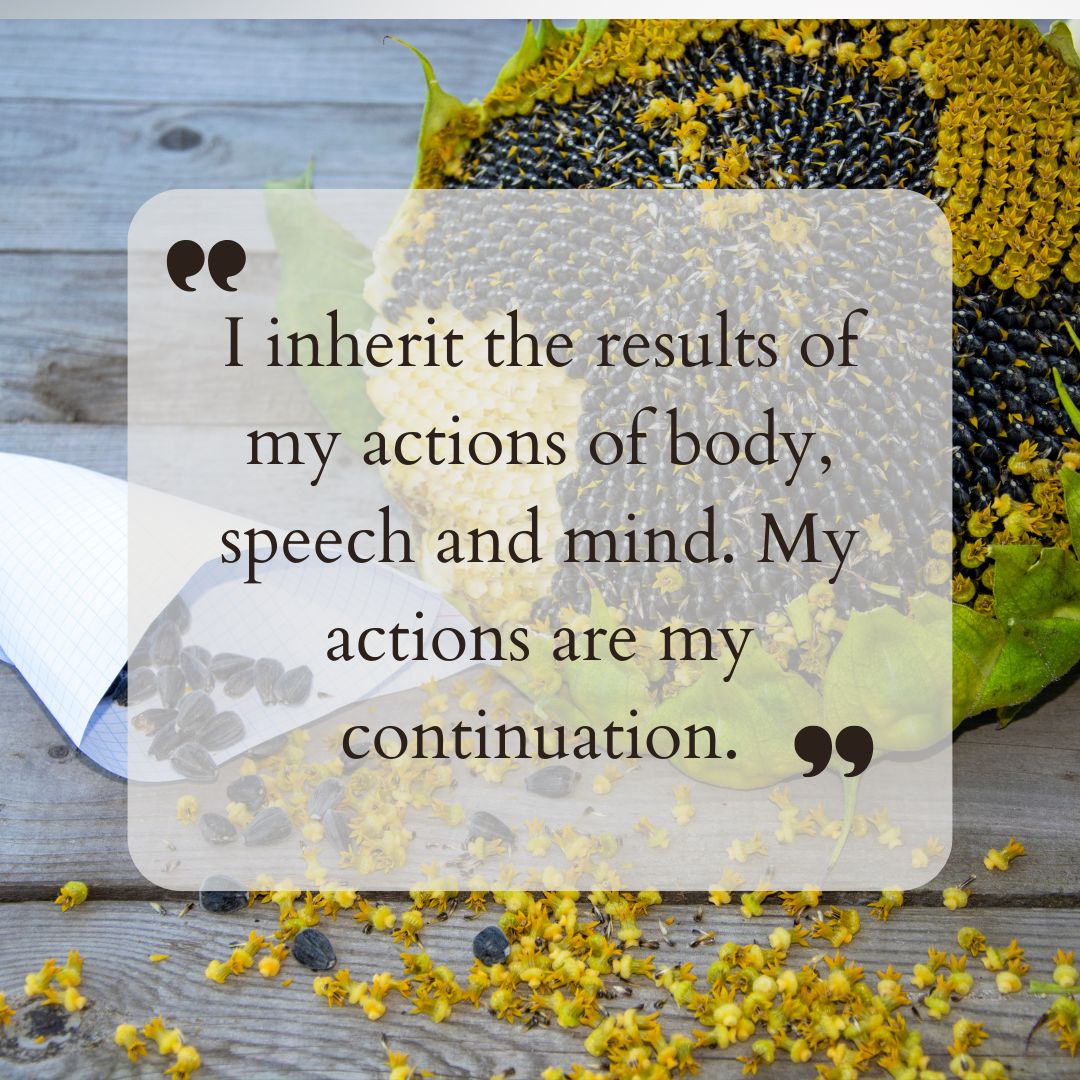
5. I inherit the results of my actions of body, speech and mind. My actions are my continuation
This one prompts me to try to be more present. To remember that today, I am living and being the story that might be told about me afterwards. I am leaving an imprint on those around me, those who I cross paths with, just as they are on me. What would I like my imprint to be? What would I feel remorse about leaving behind, intentionally or unintentionally?
I often think about what I might leave behind for my children to inherit, or what I have inherited from my ancestors. What if we thought about this in a wider sense than just our family lineages- and in a longer time sense than our immediate forebears and offspring?
7th generation thinking is a principle from Haudenosaunee philosophy, where we are encouraged to consider how our actions and decisions will affect the earth and those living on it for seven generations to come. This might involve a process of re-membering, where we reconnect with wisdom and ways of being that our ancestors or those living before us knew, but many of us have forgotten and become dis-membered from.
Would you like to talk about death and dying, or to start planning for your own end of life?
There are Death Cafes hosted around the world, including one I am due to start hosting in Newark and Sherwood District.
I can also work with you to explore your wishes for an end of life ceremony, and work with you to write your eulogy whilst you are still here.