
How to handcraft the materials for your ceremony
It is a labour of love for me to gather together the materials and props that I use within my clients’ weddings, handfasting ceremonies, birth blessings or other life-cycle ceremonies. I make whatever I can, and have sourced most of the other things from expert craftspeople or from antique stores. In this post I share why I do it, the value it brings to ceremonies, and how you are invited to get involved and do it with me.
Why make your own?
1) Reverent and responsible gathering from the abundant earth
The natural world is full of abundance and yet pretty much everything is available on the internet, delivered to our doors within hours if we want it. When we go out and gather it, we need to pay attention not only to when it might be available, but also how much there is and what effect it might have if we take some. When I notice the abundance I can’t help but feel in awe, and feel a deep sense of gratitude.
Making my own is also a mechanism for keeping in balance myself. If I can’t gather enough for my ceremonies, then maybe I’m not spending enough time in nature, tending to plants, or maybe I’m taking on too many ceremonies. If I gather more than I can process then I’m too busy or being too greedy!
2) Living Seasonally and Cyclically
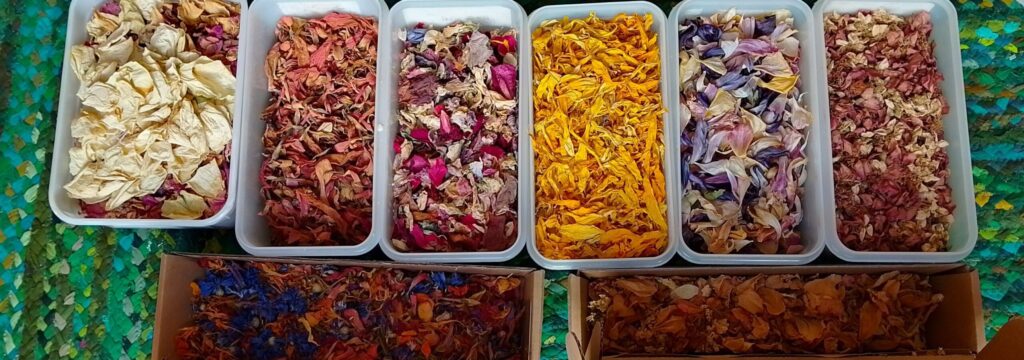
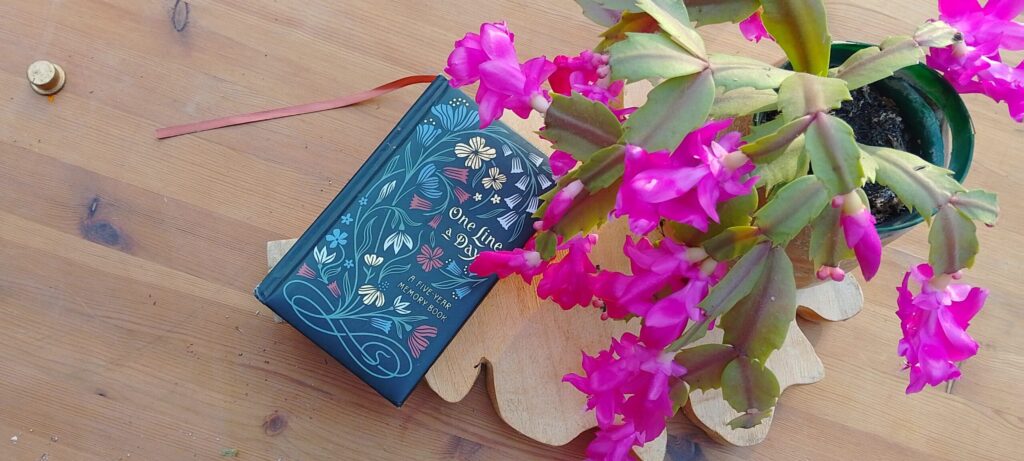
I am on a personal journey to live more seasonally and to notice and honour the phases and cycles that affect me. I often find that the people I create ceremonies for are drawn to living more seasonally and cyclically too, and I see ceremony as a tool that supports this. In our family, we have a journalling practice using a 5 year diary: each page is a day of the year, with 5 spaces to note something for that day each year. We record things like when the hawthorn trees are in blossom, when the bees swarm, unusual storms and hard frosts. After a few years we have begun to see patterns in the days or weeks that things flourish, and we can preempt them and be ready to ‘catch and store’, or make the most of the abundance. Often tasks have a ‘season’ to them- Winter months feel spacious enough to render all of the dirty beeswax and store it up ready to melt and pour into candle moulds when required. The birch twigs for broom-making need to be gathered in late winter and early spring before they begin to bud. The summer and early autumn months involve daily picking and drying of flowers.
3) Forging connection to ancestors and forgotten crafts

Making your own is a radical act of slowing down in the face of this fast paced capitalist consumerist age that we live in. This is an age in which the list of critically endangered or extinct species gets bigger each year as we destroy habitats and use land for industrial growth. As species of insects, mammals, plants, and seed varieties are disappearing, so too are cultural practices. In the UK, crafts have been classified under a similar system to the International Union for the Conservation of Nature red list. Some crafts are already extinct, and others are endangered or critically endangered. Besom-making is one of the critically endangered ones, with only 5 professional besom makers in the country making a living from besom-making.
Candle-making became a guild craft in the 13th century. There are still enough candle-makers around in the U.K. for it to be classified as a viable craft, but there is an art to making good candles that burn well. Candles used to be used as a measure of time, so chandlers (candle-makers) could judge the wick to wax ratio and predict how long it would burn for.
What do handcrafted materials bring to a ceremony?
1) Lengthening the experience of the ritual
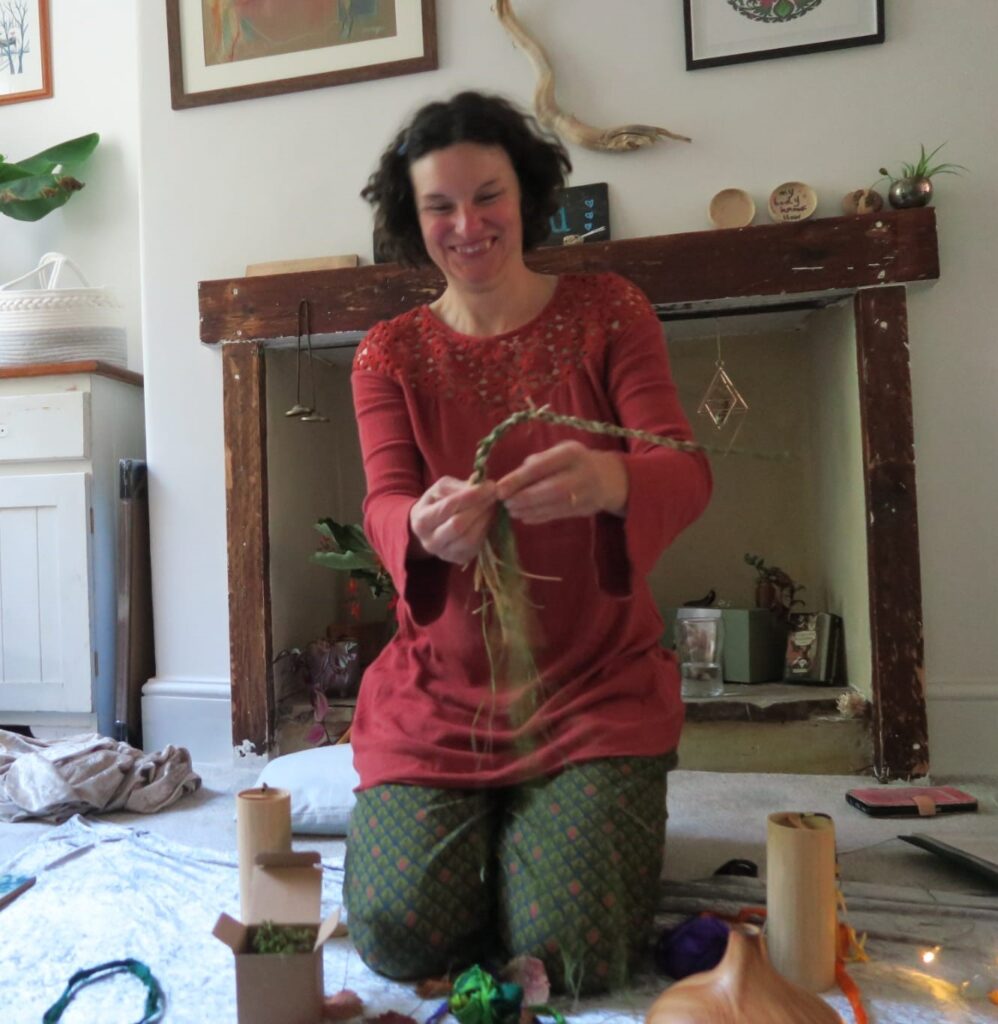
We can sometimes find that when we’re at the centre of a ceremony, we get self-conscious or overwhelmed, or it all passes by in a blur, Put another way, our souls don’t always have the time to catch up and be present. But by being involved in the making of the materials or props for your ceremony, you start to prepare yourself psychologically, practically and emotionally well before the actual ceremony, making the whole experience longer and more sustained. A handtying cord will take literally seconds to wrap around your wrists in a ceremony, but what if you have been involved in weaving the strands of the cord together in the first place- perhaps choosing the colour combination, or even making the cord itself from plant cordage from a favourite place, or scraps of garments you’ve loved and worn til they had holes in. Weaving them together can be a form of gratitude, or an act of prayer, a manifestation or an intention-setting ritual in itself? In that case, the handtying ritual really begins at the moment when you are first making the cord, and continues right up until when it is tied around your wrists and released into a knot!

2) Deepening the experience of the ritual
Being involved in making your materials or props for the ceremony also enables you to weave intention into the item. A handtying cord you have woven yourself while thinking about your vows will feel so much more powerful when you have it tied around your hands when you are articulating your vows!
3) Widening the experience of the ritual
You might choose to make your materials for the ritual or ceremony with a group of your closest friends or family. They will not only be your guests at the ceremony but also the people who will most likely be there for you through thick and thin in all the time that follows. Imagine what fun you might have during an alternative hen, stag or mixed gender do, learning green woodworking skills together and using traditional tools to make the besom that you will jump at the end of your wedding ceremony. At that point, you will be leaping over a great mound of love that has been infused into the besom during its making! Everybody who put their hands to it will feel more engaged in the ritual itself as well!
How can you get involved and start crafting your own ceremony materials?
Over 2026, I will start offering four different bespoke sessions for couples and/or groups of people.
1) Make a flower crown and learn how to use petals for confetti, drinks or food. (late spring- September). Perfect for an alternative pre-wedding bridal shower, or a pre-birth blessing for parents-to-be
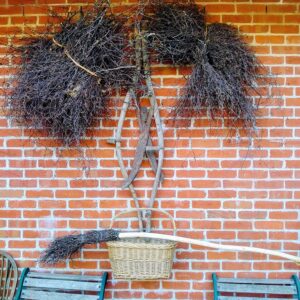
2) Handcraft your own besom (traditional circular headed broom) for threshold-crossing rituals or cleansing ceremonial spaces (from late winter onwards, as long as materials are available)
3) Weave your own Handfasting cords for a handtying ritual, a handfasting ceremony or a family ceremony (year round) (please enquire- coming soon)
4) Make your own beeswax candles for lighting in your ceremony or giving to your guests (please enquire- coming soon)
I hope this post has inspired you to think some more about what makes your ceremony meaningful, and how you might prepare for it. Making your own materials at home is possible too of course, and you may be fully equipped and skilled to do this already. But, if you feel like you might not get around to it or don’t quite know how, I’d be really happy to work alongside you, sharing what I know and creating a meaningful and connecting experience out of it at the same time.