
How to get legally married AND have a meaningful ceremony?
In England and Wales, a legally endorsed ceremony can currently only be offered by certain types of religious officials, or in the case of a civil (non-religious) ceremony, by a registrar. A registrar is a civil servant licensed to register births, deaths and marriages. They must host your ceremony either in a registry office or in a venue licensed for civil (non-religious) ceremonies, and include the necessary legal wording.
If you don’t follow a particular religion, or if there is no single religious framework that fits both of you as a couple, then you might be wondering how you can have a ceremony that feels meaningful and personal to you, whilst also fulfilling the requirements for a legally recognised marriage.
For some people, the change in legal status accorded by marriage is deeply meaningful and enabling, and might be the difference between secure residential status or not. Even so, there are still ways to mark this momentous occasion with a ceremony that suits you and celebrates you more personally than a civil ceremony usually allows for.
Changes in law in England and Wales are expected, following a public consultation due in 2026. These changes might allow celebrants to register to host legally endorsed ceremonies as well as maintaining our role as hosts of heartfelt, personalised and deeply meaningful ceremony. However in the meantime, one answer is to separate out these two things: to book a simple statutory legal ceremony to register the marriage, and hold a celebrant-led ceremony separately.
What does a civil ceremony involve?
If you’ve ever been to a civil ceremony, you may have thought that the civil ceremony script was dry. In fact they have very little variation, couples have very little choice, and the registrars have usually repeated them hundreds of times in their lives, perhaps even three or four times within the same day. There are some variations depending on the package the couple has chosen, but the framework as a whole is designed to be consistent as its main purpose is bureaucratic.
For some couples who are gathered in front of their loved ones on one of the most significant days of their lives, the moment can be bit awkward or embarrassing, and for the audience- sometimes a bit of an anti-climax or a bit boring. The audience is not invited to be involved in the proceedings at all, and where we’d like to applaud or cheer, we are often not invited to.
How is a celebrant-led ceremony different?
A wedding ceremony doesn’t have to be just a bureaucratic affair! In fact I believe that every couple deserves for their love and commitment to be celebrated in a heartfelt and meaningful way. That’s where the celebrants come in!
If you choose a celebrant-led ceremony, and also make a trip to the registry office to complete the legal proceedings with a minimum of two witnesses, you can be meaningfully AND legally married.
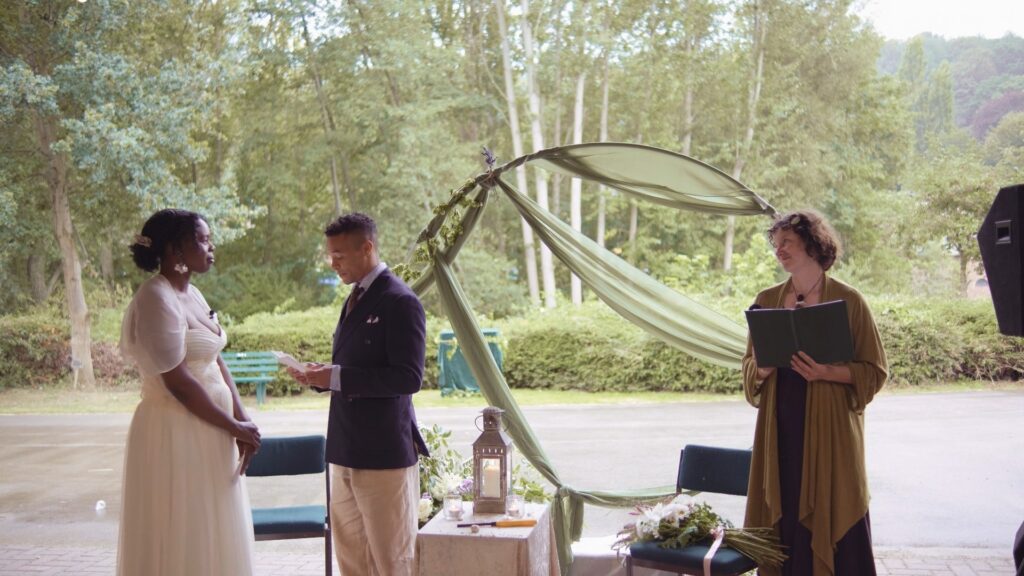
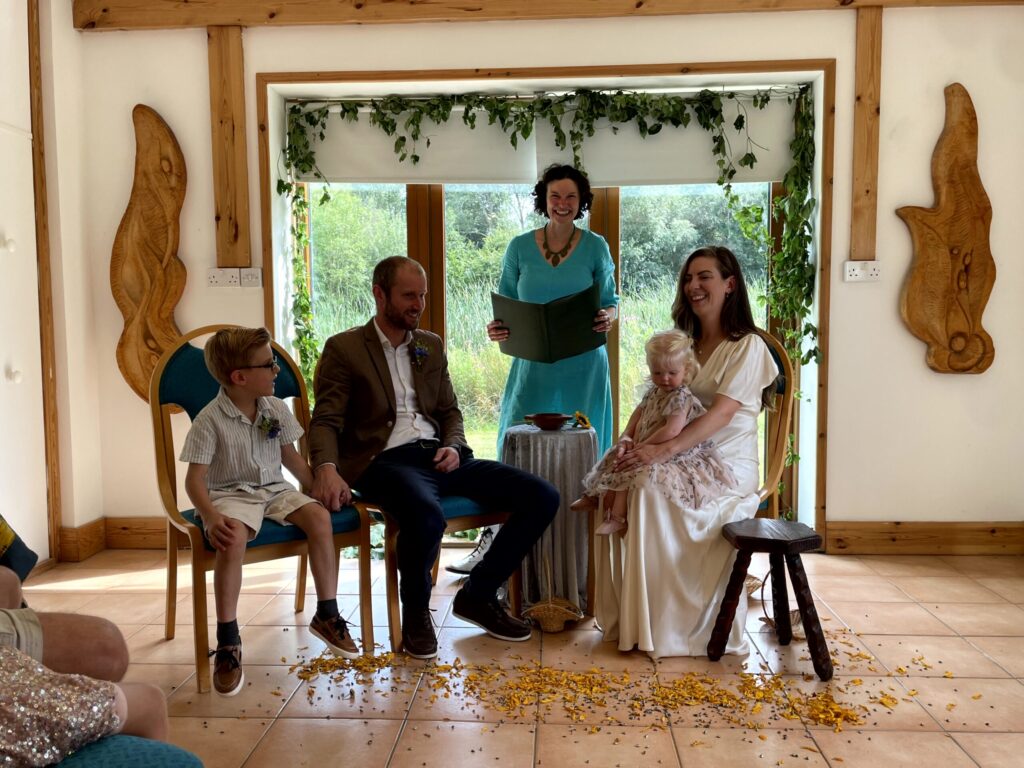
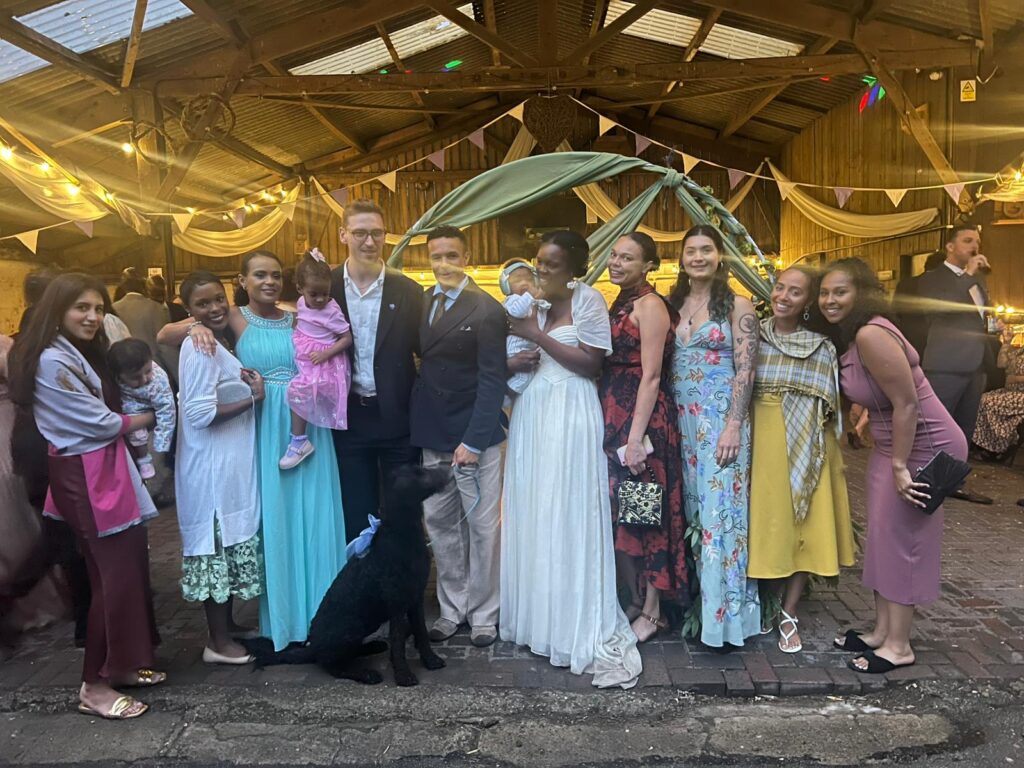
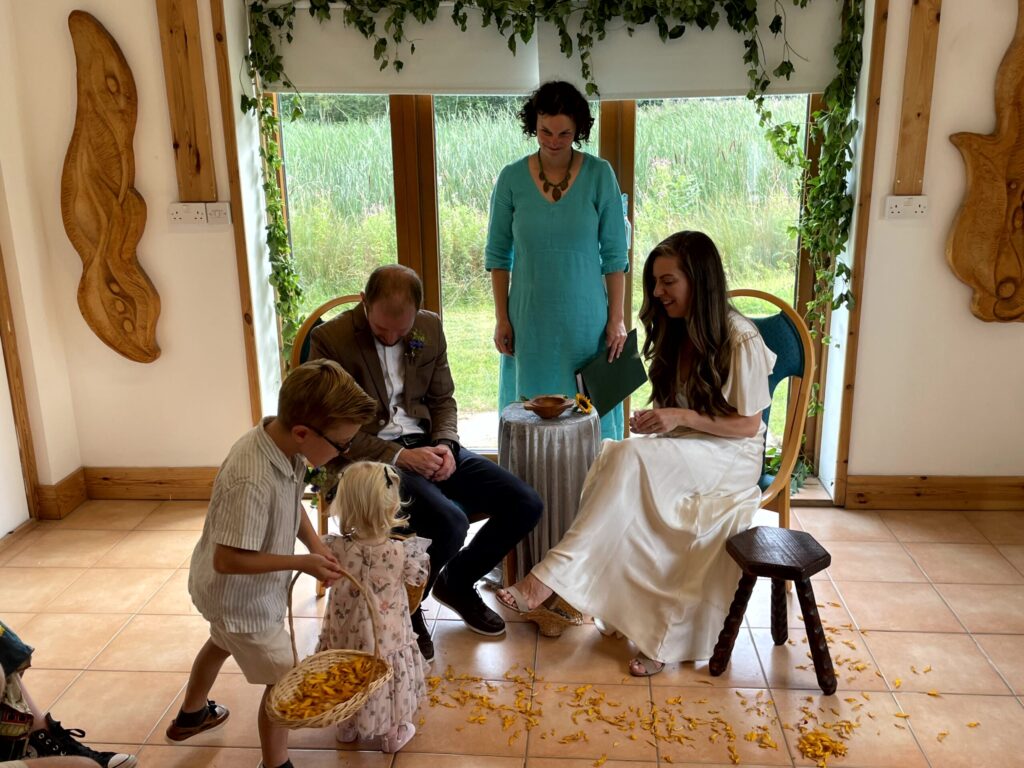
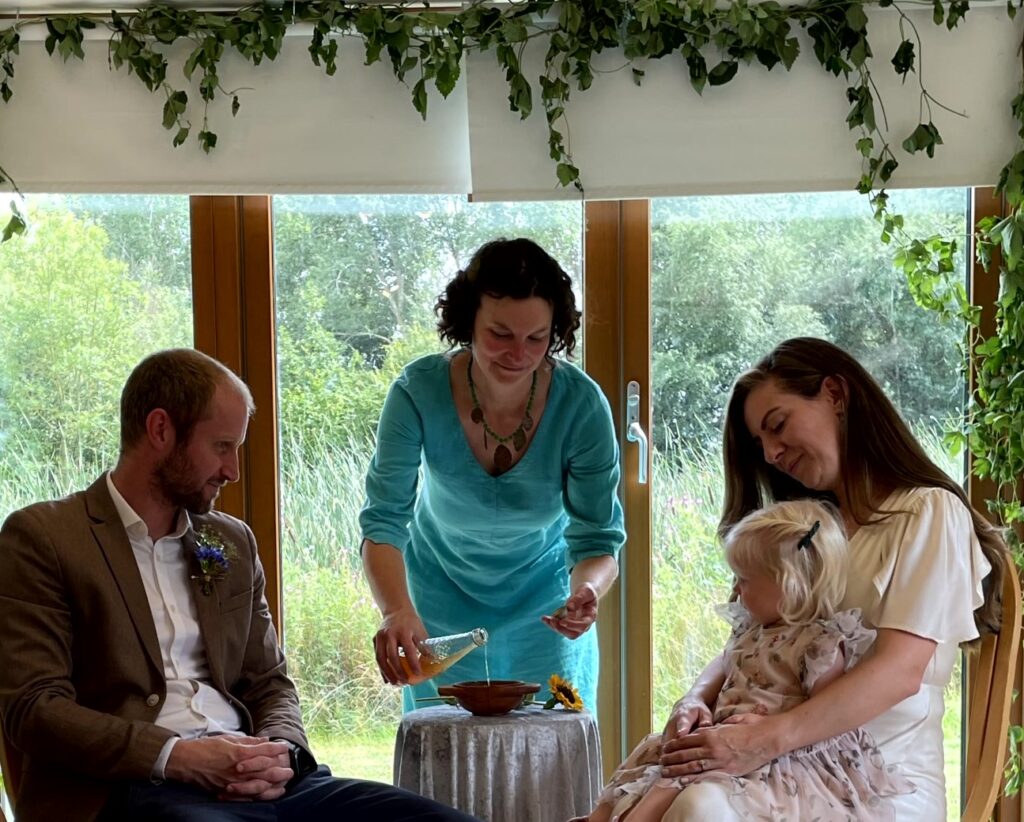
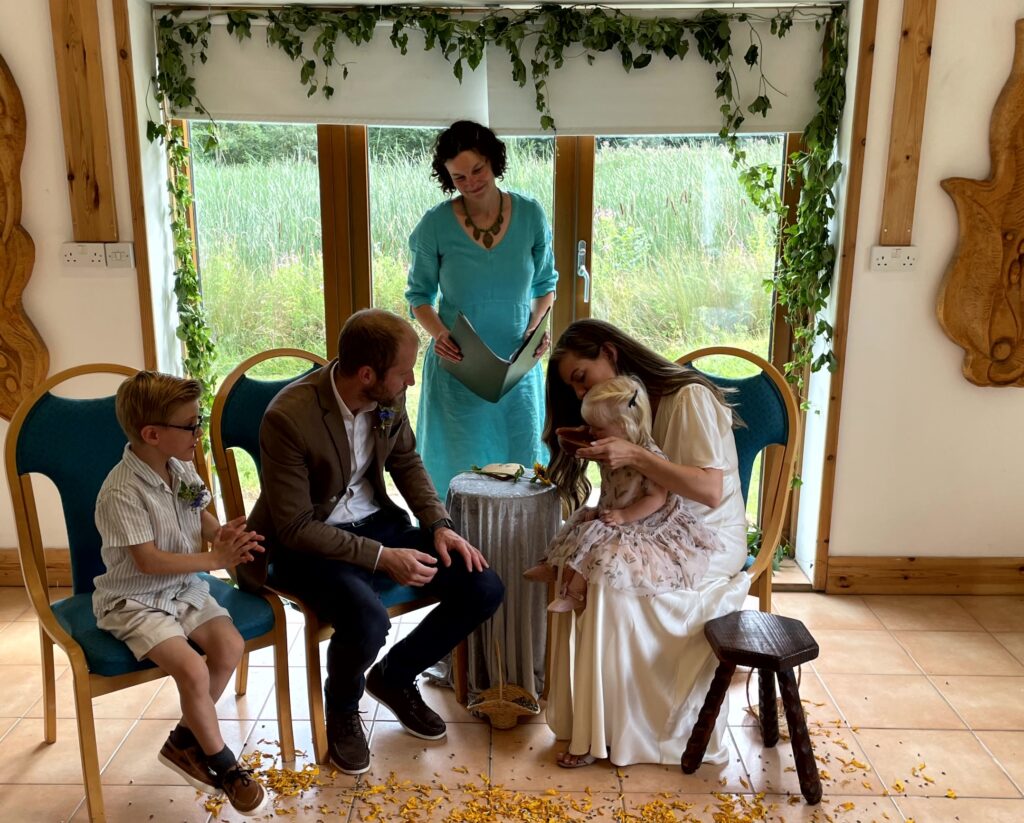
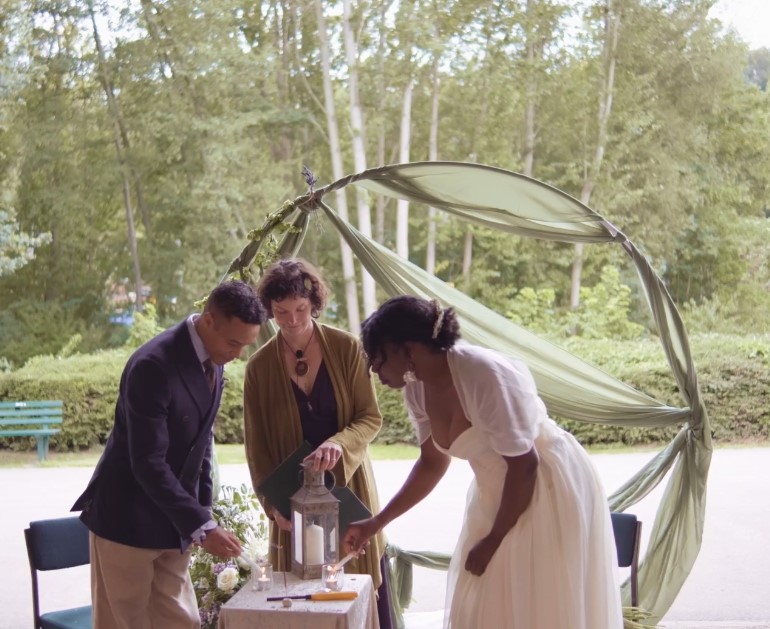
Remember a celebrant-led ceremony can be anywhere, and can involve any number of people- even just yourselves the couple. You can draw on any faith(s), creed(s), beliefs or worldviews that are significant to you. As for what we include in it, that is where the magical co-creation process begins! Here are some images and guest testimonies to give you a flavour.
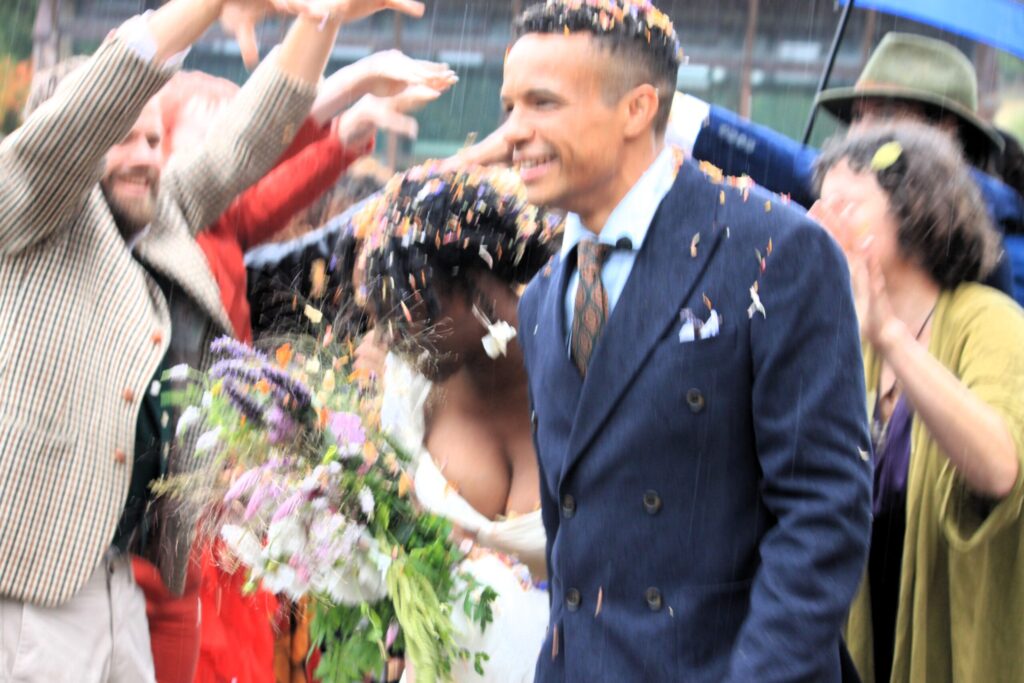
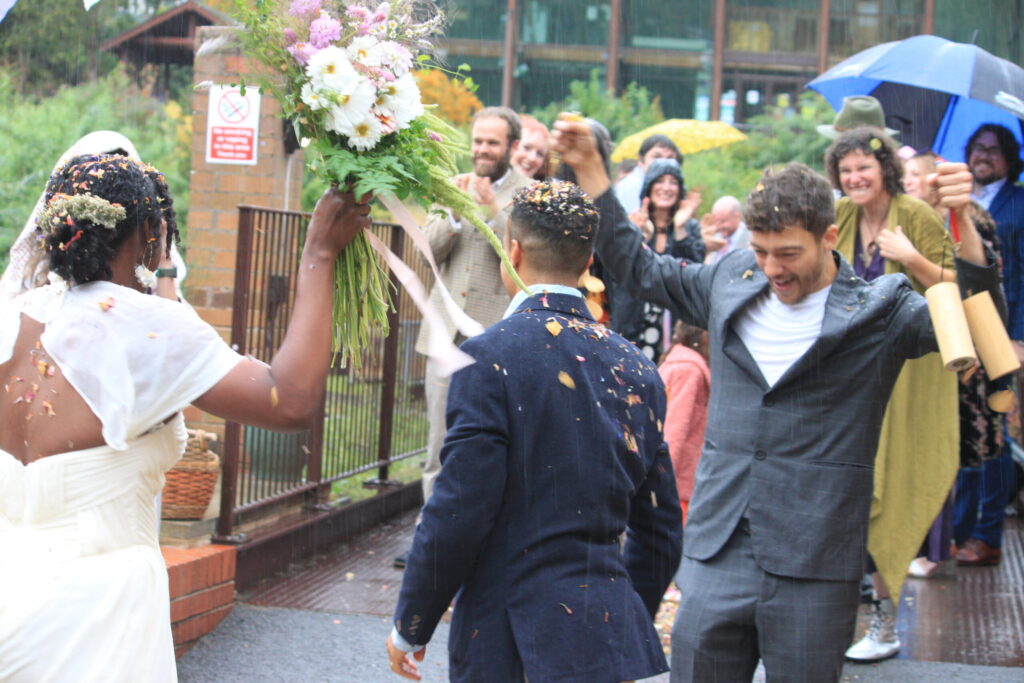
What guests have said…
“Wow, I never knew a wedding ceremony could be like that!”
“Normally I never cry at weddings but I nearly did!”
“That was the best wedding I’ve ever been to!”
“That was so Asher and Aicha! It suited them perfectly!”
Why do the legal wedding ceremony separately?
With other significant moments in life or death, we are used to completing the bureaucracy separately from the ceremony, ritual or symbolic set of actions. Here are some examples.
- It is not the registering of a child’s name that is ‘the significant moment’ in the process of welcoming a child into the world.
- If you are buying or renting a house, it is not the signing of the legal contract but the getting of the actual keys and crossing the threshold into your new home which feels like the significant moment.
- We do not expect the registering of a death to provide us with space for the emotional processing and housing of grief that we experience when saying goodbye to a loved one.
If you do the legal bit separately, you are then completely free to work with your celebrant to co-design the ceremony that suits you down to the core.
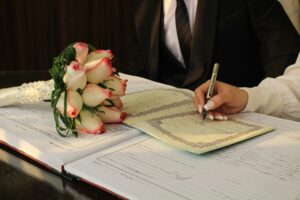
How to legally endorse a marriage as simply as possible?
First choose your ceremony type and check availability. The simplest and cheapest type of civil ceremony is a statutory ceremony, which requires you to bring two witnesses. In the financial year 2025-2026, this costs £56 plus a £12 certificate. Some counties don’t offer this up very easily because it is the option they make least money on. Times and days that this is offered are also restricted. Have a look at my handy resources page to see information for East Midlands and Yorkshire. If you are unable to book this option, or if you want more guests, you can instead choose the standard ceremony.
Before your ceremony, you’ll need to give notice at your local registry office. This must be at least 29 days and no more than a year before your ceremony. This is a simple appointment with a small fee to pay. You and your partner go in separately and you’ll need to remember each others’ dates of birth (my partner couldn’t remember mine!)
On the ceremony day, just turn up (in good time!) with your two witnesses!
If you’ve decided you’d like to have a celebrant-led ceremony, your next step is to start looking into celebrants! Choose wisely! There are lots of us on hand.
I’ll be publishing another post soon giving some guidance on how to make that choice. You can also read more about me or get in touch to book a free no-obligation exploratory call