

How to make eco-friendly confetti- lessons from roses
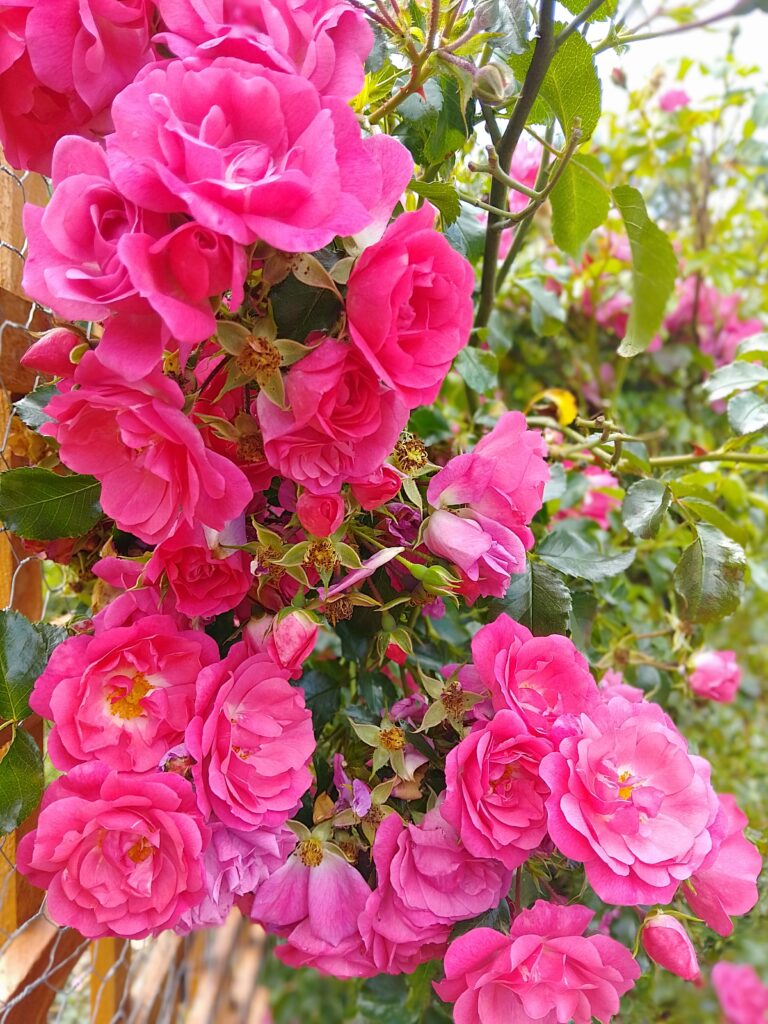
This is our first year of living on our smallholding in rural Nottinghamshire. This month I have been discovering the joys of harvesting flowers to use as confetti and in flower blessings during the wedding ceremonies I hold as a celebrant. Our neighbours told us that the rose we cut back in the winter was a special one. They called it Tina’s Rose, after the person who planted it. And this month it has been giving and giving so abundantly of its blooms. I delightfully take in its fragrance every morning and evening as I let the ducks in and out of their pasture.
Earlier this month I noticed its petals dropping to the ground- sometimes a whole rose head tumbling down as I brushed past it. The burst-open-phase of each one is so temporary, yet so beautiful, so intricate, so sensuous.
I found a poem by Mary Oliver that speaks of this process and takes lessons from it…
When the roses speak, I pay attention
“As long as we are able to be extravagant we will be
Hugely and damply extravagant. Then we will drop
Foil by foil to the ground. This is our unalterable task,
And we do it joyfully.”
And they went on “Listen,
The heart-shackles are not, as you think,
Death, illness, pain,
Unrequited hope, not loneliness, but
Lassitude, rue, vainglory, fear, anxiety, selfishness”
Their fragrance all the while rising from their blind bodies, making me
Spin with joy.
(Mary Oliver, published in Thirst, 2006).
This poem was part of a volume dedicated to the poet’s partner for some 40 years, Molly Malone Cook, who had died a year before it was published. A lot of the poems speak about grief, and some about Mary’s newly found faith. The message I take from this poem is that while death, illness and pain are inevitable, the things that encumber us are regret (rue), vanity (vainglory) and meanness of spirit. Being human is not easy, but where we have it in us, we can choose to give of ourselves generously and joyfully, without expectation and without holding back.
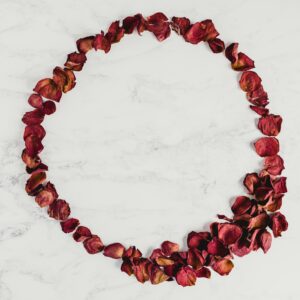
Still I saw another purpose for the roses which would prolong their extravagance beyond their life on the rosebush. The practice of throwing of flower petals or leaves goes back as far as Ancient Greece where it was common during weddings and other celebrations. Over the years and in different places in the world, the thing that was thrown at couples varied. The word ‘confetti’ originates from northern Italy in the Middle Ages – confetti means sugar-coated almonds, and represents the bitter-sweetness of married life. Elsewhere in Europe in the Middle Ages, flower petals or grains were thrown over a couple, wishing them prosperity and fertility and warding off evil spirits. In 19th century Europe, the paper industry got hold of the confetti tradition and dominated it for over a century. Thankfully, recently have a lot of wedding venues banned it, recognising the years it can take to decompose and the harm it can cause to wildlife. In the U.K. it has once again become common to throw flower petals over a couple at weddings. In the ceremonies I design, I also sometimes invite children to create a circle of rose petals and lavender around a couple to hold them in love and grace, calm and dedication.
After gathering some tips from a neighbour who worked as a wedding florist, I decided I would begin harvesting my own ‘confetti’ to offer to my clients for their ceremonies. Here’s what I did.
1. Select the perfect petals
First I sought the rose flower heads that were fading slightly from their exuberant bright pink. I tested each one by pulling it gently. If it easily came off in my hands it was perfect. If it didn’t easily give I left it. I then snipped off the stem to remove the sepal to encourage the rose to keep on producing more flowers. Alternatively you could snip off the whole head slightly below the sepal (the part that attaches it to its stem) and then pull off the petals.
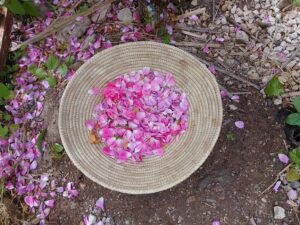
2. Lay out to dry out of the light
I brought in the petals and spaced them out on a flat surface in a dark corner of my room (after removing the cobwebs!). Roses keep their colour best if they are not exposed to light when drying. For me this meant leaving the curtain slightly drawn. We have a multi-layered mesh which is perfect for drying herbs and flowers, but my neighbour puts them on a bed sheet on a spare bed (I love this new definition of a ‘flower bed’!)
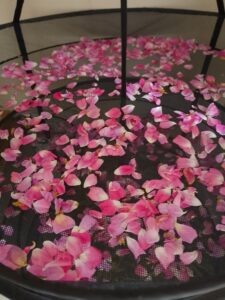
3. Store in a dry, dark place
After a day or two they are bone dry and ready to be stored away in a paper bag in a dry, dark place.
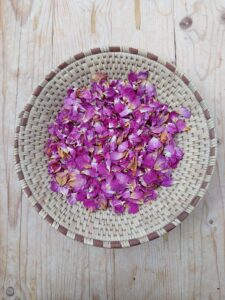
4. Experiment with other petals!
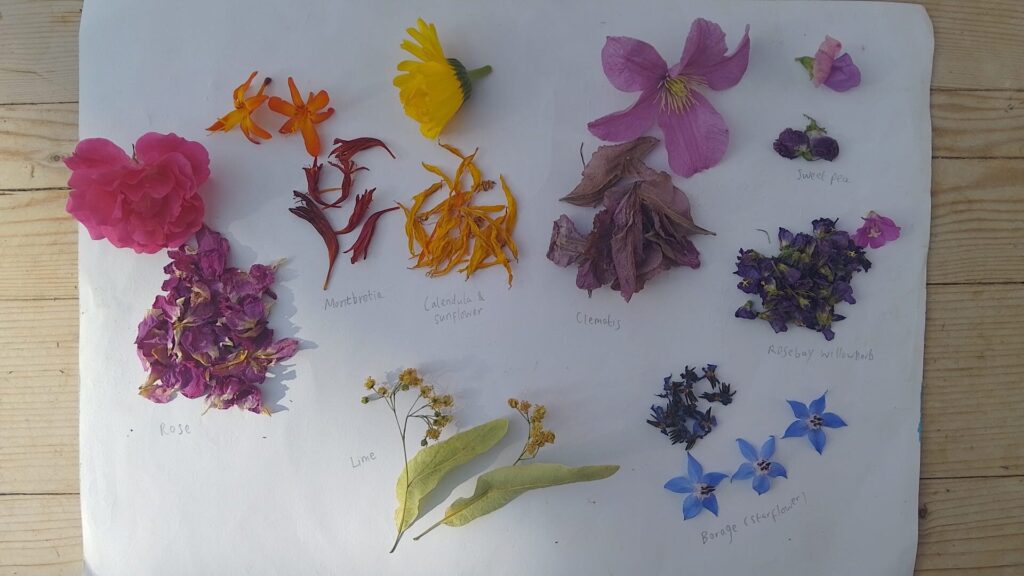
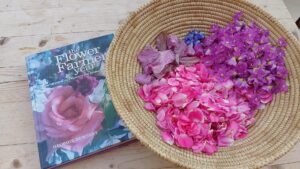
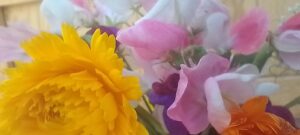
The rose petals turned out beautifully so I carried on experimenting with other flowers in our garden. All but the borage worked well.
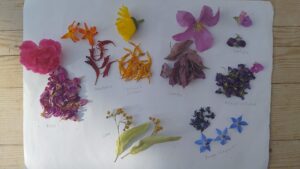
Top tips
-
Go with what you have in abundance and start experimenting!
-
Leave plenty for the pollinators.
-
With flowering annuals that have a branching habit (lots of secondary branches coming off the main stem, e.g. sweet peas, roses, carnations, chrysanthemums), pinching or snipping off the flowers will encourage them to produce more flowers rather than setting seed. If you want them to set seed then leave the flowers on to encourage this.
-
When drying the flowerhead, pick the petals off the sepal (the part that holds it onto the stem). This will allow the petals to dry quicker.
-
Some flowerheads drop completely onto the ground, aiming to reseed themselves in the soil. If you want to encourage this, leave them to it!
-
Some flowers turn very shrivelled and lose their stunningness when dried. Borage is a good example! This edible flower would be better used fresh in a salad or frozen in icecubes.
-
Some flowers are momentary and are over in a couple of weeks or less (e.g. lime) Others bloom for months (e.g. calendula). Some need picking to keep on blooming (e.g. sweet pea). Observe your flowers and pick your moments accordingly!
I’d love to hear about your experiences if you have a go at doing this yourself, or if you would like to talk more about the way that flower petals can be used in a celebrant-led ceremony! Keep a look out for more posts on DIY celebrations.