
Nine ways to involve your community in your ceremony
Those that lived on the British Isles before us would have come together in community throughout the year, marking the turning of the seasons with festivals and fires. When more people lived their lives connected intimately to land and farming, we would have gathered together to make hay, bring in the harvest, feast together and tell stories. Most of us don’t do this any more, and we have lost many ways of coming together in community in ways that are nourishing for everyone involved. Religious communities offer belonging and ritual as well as guidelines for how to go through rites of passage in community. But many of us don’t have a spiritual or faith-based community to turn to.
Weddings are the nation’s principal remaining rite of passage where it is still common to surround yourself by your community. (When that happens for end of life ceremonies, we’re usually not present to witness and be nourished by it!) If you are gathering a diverse set of people together to witness you in an important moment in your life, you will have some choices to make about why and how you do that. Are you gathering people to witness stunning perfection and immaculateness? Or are you gathering people to open up their hearts and hold you in a moment of vulnerability and bravery? Do you see your honoured guests as passive recipients of all that you are laying on for them? Or are you inviting at least some of your guests to also roll up their sleeves and get involved in creating the elements of your celebration (such as food, music, decorations), or helping you to hold it all together?
These questions might trigger some responses in you, for example pride, honour, expectation…
Your set of values and cultural framework will guide you here, and there is no absolute wrong or right. I encourage you though, to lean into what feels right for you, rather than what society tells you that you should be doing.
These days within capitalist culture, individualism and competition dominate so many situations. Weddings and other celebrations often centre around getting the most glamorous photo-shoot and showing off exuberance in terms of choice of venue or money spent on décor, outfits and catering. Even with the cost of living crisis, the average spend on weddings in the UK in 2023 was still over £20,000 (according to Hitched). This vibe is off-putting for anyone who can’t afford or justify spending that much, and also for anyone who doesn’t feel drawn to going through such a big and out-there thing. And when it is so much about being on show, it might not feel safe enough to be vulnerable- to show emotion and invite moments of open-heartedness in your ceremony, or to ask for help in organising your celebration.
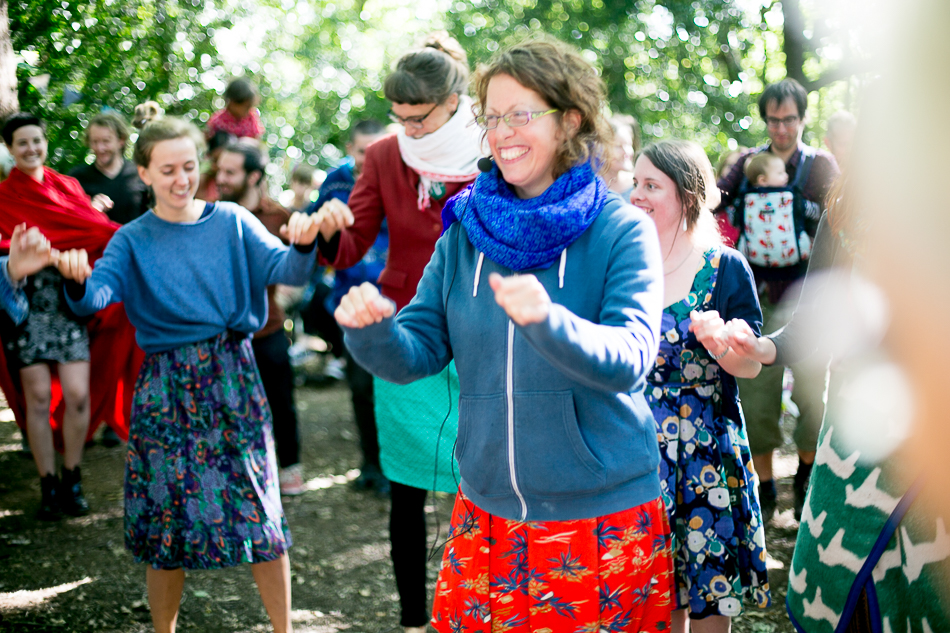
It doesn’t have to be this way though! Celebrations and ceremonies that are rooted in community, can feel nourishing, connecting and meaningful for you and your guests. You are likely to end the day full of gratitude for all your incredible friends and family who offered up their time, their love and creativity to support you. And everyone who was able to get involved is likely to feel more connected to you and your special day than they might have done if they came as more passive guests. You might also have ended up buying less; creating more opportunities for goodwill and reciprocity; and building up a little more resilience in your community. In turn, others might be inspired to do the same.
If you are feeling like you could involve your community more closely in your ceremony or celebration, read on! If you are feeling resistance or want to explore the idea of community a bit more first, take a look at my post ‘Longing to Belong…’
Here are 9 ideas for rooting your ceremony in community, in terms of choice of venue, the choices you make around your ceremony itself, and the way you piece together the other elements of the celebration.
Venue Ideas
1. Host your celebration in a venue that benefits the local community
Where would you like the money you are spending on a venue to go? Many licensed wedding venue options are in stately homes or on big estates, which historically were taken out of common ownership at the time of the Enclosures and remain the property of the country’s elite class. Meanwhile, village halls and community centres are amazing assets, but many are struggling to remain viable as their funding is axed or people stop using them. They are usually affordable to rent out, and the rent helps them to keep open and keep serving the local community.

2. Host your ceremony on common or public land
3-4% of land in Britain is still common (including much of the moors and uplands), meaning that despite private ownership, the general public have the right to roam and farmers can graze animals. Gathering respectfully on a hill or a moor for a short ceremony is no different from having a group picnic together, as long as you take nothing but photos and leave nothing but footprints (and perhaps some flower petals). Alternatively, you may have a favourite park or woodland in mind for your ceremony, one that might be community-owned or managed by the local council. Depending on what your ceremony involves, it may be wise to ask permission from the landowner. Most often, if other members of the public are passing by, they will love to glimpse you celebrating in a public place, whilst respectfully leaving you to it.

3. Hire a campsite or self catered accommodation to host your celebration
If you are nervous about the unforeseens of hosting a pop-up ceremony in a completely public place, you could look into hiring a campsite or self catered accommodation where you and your guests come together in community for a night or two and everybody gets involved in the work of keeping camp, preparing for, and tidying up after the celebrations. The whole experience will be memorable, both the sacred and the mundane moments!
4. Ring Warming
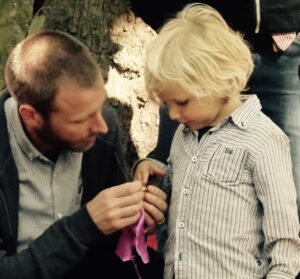
My favourite moments in our wedding and my sister and brother in love’s wedding were the ring warmings. This sounds like it comes straight from Lord of the Rings but it’s actually an old Irish tradition as well as being traceable back to the Greeks and Romans. They believed that metal is a powerful conductor of energy so passing the wedding rings from person to person before they are exchanged by the couple imbues them with the love of all the guests. In the Irish tradition, each person warms the rings in their hands and offers a silent blessing before passing it on to the next person. This might be done to music during a dedicated moment in the ceremony, before the ceremony begins, or quietly during other elements of the ceremony.
5. Community Blessing
I often end my ceremonies with an opportunity for a community blessing. Following the wedding vow pattern of a question followed by ‘I do’, I ask the audience if they commit to offering their [support/ guidance/ love/ mentorship/ friendship etc] to the couple or individual that the ceremony is centred around. They answer with ‘we do!’. This might be said at the tops of voices, or accompanied by drums and shakers, or it could be solemn (like in the Christian baptism script). You choose! However it’s said, it’s powerful to receive that affirmation and equally powerful for people to commit to it out loud and together. A community blessing can also be woven around you using bunting or a ball of wool accompanied by personalised messages!
6. Community Certificate
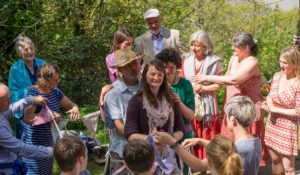
A practice I love from Quaker weddings and celebrations of commitment, is the signing of a certificate by everybody who witnessed the ceremony. This dates back to before Quaker marriages were legally recognised (and also before same sex marriages were legally recognised)- that two people (regardless of gender) could be married in the eyes of God and that everyone should accept and recognise this relationship, even if at times the law of the land didn’t agree. Continuing this practice puts the love and support of your surrounding family, friends and Friends (in the Quaker sense) on the page and makes you want to frame it. There are some gorgeous examples of hand illustrated certificates out there.

Other elements of your celebration
7. Co-create a feast (or source a local one)
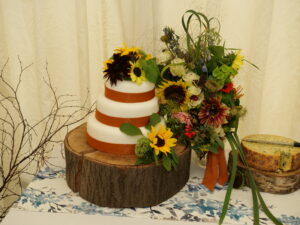
Have you got friends and family that you could ask to bring food or drink along to your ceremony? Where are the hidden talents, the signature dishes that bring a person pleasure to make and everybody pleasure to eat? A potluck or a picnic where every contribution is made with love is like no other feast. If this feels complex or unworkable (e.g. if people are travelling from afar), then can you source your catering from a local supplier that employs local people, and sources ingredients from local suppliers, farmers and food producers? That way you are contributing to the growth of your local geographical community economy and a struggling but vital local food economy.
8. Crowdsource your entertainment
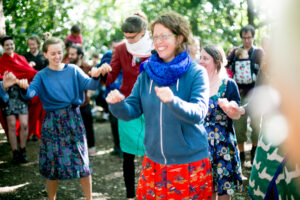
Forget the ChatGPT-written wedding speeches. Who do you know who could play an instrument or sing during your ceremony, play with the younger guests, DJ at the party or do fire poi when it gets dark? Have you got a friend who would love to lead a workshop to get everyone singing, dancing, crocheting or making origami?!
9. Maximise cross-pollination between guests
Many of us spend most of our time surrounded by people of the same age, profession, gender identity, ability etc. This is not natural! For those celebrations where you invite the friends and family and colleagues that have walked alongside you or been present for significant periods of your life, there is quickly a melting point of people on your invite list. How can you create the conditions for new connections to be made between people? What about a round of ‘speed dating’, a quiz, a bowl of questions in the centre of the table, or intentionally teaming people up to help with certain tasks? Or if your guests have warmed up and opened their hearts to you and each other during the ceremony, magical connections might just happen anyway…!

“Networks thrive when we make space and celebrate the connections between the different aspects of our lives.”
Erika Owens
You don’t have to do all of these of course, but I’d love to hear if any of them inspire you or if you’d like to work together to co-create a celebrant-led ceremony with me that prioritises any of these ideas. They usually make for my favourite kind of ceremonies and I’ve got lots more ideas up my sleeve!